When the allergist says fix the house
North Texas allergy seasons are brutal, and a leaky, under-filtered home lets them follow you inside. We build layered air-quality defenses for households where allergies rule the calendar.
What honest allergy relief air quality services looks like
Cedar in winter, oak and ragweed trading shifts the rest of the year: DFW sits in one of the country’s rougher allergy corridors, and for plenty of families the symptoms don’t stop at the front door. Indoor air in an average home carries outdoor pollen tracked and leaked inside, plus its own load of dander, dust-mite allergen, and the mustiness of humid ductwork. No single gadget fixes that. A layered approach genuinely does.
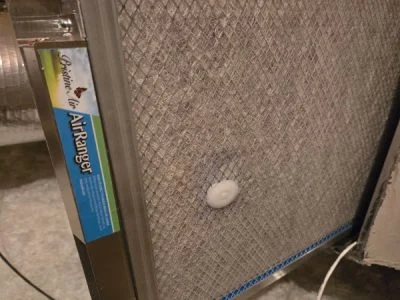
The layers work together: filtration dense enough to catch pollen-scale particles, matched to the blower so it actually flows; duct sealing so untreated attic air stops bypassing the filter entirely; humidity held near 50 percent, which suppresses dust-mite populations; and where testing shows biological growth, UV at the coil. We build the stack in impact order for your specific house, usually starting with the unglamorous fixes that move symptoms most per dollar.
The allergy-defense stack
- High-efficiency filtration, blower-matched
- Duct sealing to close filter-bypass paths
- Humidity control targeting dust-mite suppression
- Coil UV where growth is confirmed
- Fresh-air filtering on ventilation intakes
- Bedroom-first strategies for sufferers
Air quality in North Texas homes fights a two-front war: some of the country’s roughest pollen seasons outside, and houses sealed tight against the heat for most of the year inside. That combination concentrates whatever gets in and whatever gets generated indoors, which is why measured, layered fixes outperform any single gadget in this climate.
How the visit goes
Start with the actual problem
Air quality work starts with your symptoms, dust, allergies, smells, humidity, and an honest look at their sources. The goal is a diagnosis, not a product demo.
Fixes ranked by impact
You get the fix list in payback order, filtration, sealing, humidity, purification, with plain talk about which options are proven and which are marketing. You choose where to stop.
Installed to work, verified
Whatever gets installed is matched to your system’s airflow, mounted correctly, and verified doing its job. Then it goes on the maintenance schedule so the protection stays real year after year.
Why this work comes to 2L, all across Midlothian and the DFW area
Air quality is the wild west of HVAC, full of glowing gadgets and miracle claims. 2L’s approach is boring on purpose: measure the problem, apply the proven physics, skip the placebo hardware, and tell you plainly what each option will and won’t do.
We prioritize bedrooms, because eight hours a night in cleaner air moves symptoms more than any other single room, and we sequence upgrades so you can stop when relief arrives instead of buying the whole catalog on day one. Families usually feel the difference inside two weeks of the first layers going in.
Nearby communities we serve for this work:
Questions homeowners actually ask
Straight answers, the same ones you’d get on the phone. If yours isn’t here, call and ask.
Can HVAC changes really reduce allergy symptoms?
Meaningfully, yes. Filtration, duct sealing, and humidity control together cut indoor allergen loads hard, and households routinely report easier mornings within weeks. It complements medical treatment, it doesn’t replace it, and we’re plain about that.
Where should an allergy-focused family start?
Usually filtration matched to the blower plus duct sealing, they’re the biggest movers per dollar. Then humidity control if the house runs damp, and UV only where the coil is confirmed as a growth source. We sequence it so you can stop at relief.
What about the cedar fever season specifically?
Cedar pollen is small and prolific, which makes filter density and bypass sealing matter most. A sealed return path with high-MERV media is the difference between a home that shelters you in January and one that doesn’t.
Do we need air quality testing first?
It helps target the spend, especially if symptoms don’t match the obvious seasons, which can point at indoor sources like duct contamination or humidity. For classic seasonal patterns, starting with the proven layers is reasonable too.
Will this help with asthma as well?
The same particle and humidity controls that ease allergies reduce common asthma triggers, and several of our clients came to us on a pulmonologist’s nudge. Same honest framing: it’s a strong complement to medical care, not a substitute.
Ready to get this handled right?
Tell us what your system is doing and Jimmy will get right back to you with the next step: a clear answer, a fair price, and allergy relief air quality services done the way it should be. Reach out through the contact page or call any hour.
(214) 717-3959
Honest heating, cooling, and air-quality service for Midlothian, TX and the surrounding DFW communities. Owner-operated since 2023.
Open 24/7 for emergencies
Midlothian, TX 76065