Cut the sticky, keep the cool
When the air feels clammy at 74 degrees, humidity is the problem, not temperature. A whole-home dehumidifier wrings out the moisture your AC alone can’t keep up with.
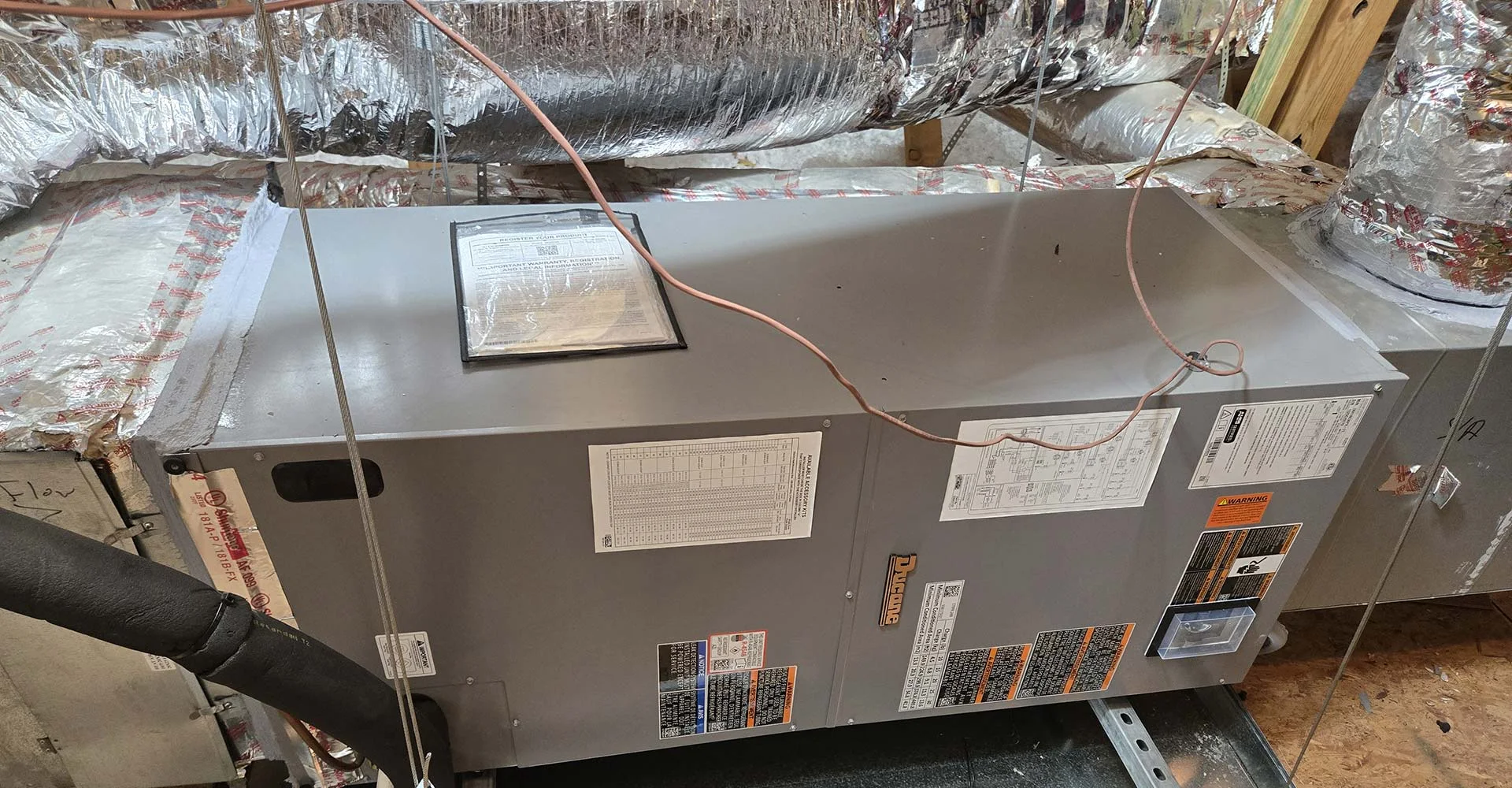
Straight talk about whole-home dehumidifier services
North Texas humidity is at its worst exactly when the AC is working least: mild, muggy spring and fall days when the system barely runs and moisture builds indoors. Even in summer, an oversized or short-cycling AC cools the air without wringing it dry, which is why some houses feel cold and damp at the same time. Sticky air at 74 reads as discomfort, drives the thermostat lower, and feeds dust mites and biological growth that both prefer humid rooms.
A whole-home dehumidifier plumbed into the return side pulls moisture on its own schedule, independent of whether the AC needs to run. Set the target, typically around 50 percent, and the unit holds it through muggy shoulder seasons and damp summer nights alike. The house feels cooler at higher thermostat settings, which usually claws back part of the operating cost in reduced AC runtime.
Signs the house needs one
- Clammy, sticky air even while cooling
- Musty smells in closets and baths
- Condensation on windows and supply grilles
- Allergy flare-ups from dust mites
- Comfort only at aggressive thermostat settings
- Mild-day mugginess the AC can’t touch
Air quality in North Texas homes fights a two-front war: some of the country’s roughest pollen seasons outside, and houses sealed tight against the heat for most of the year inside. That combination concentrates whatever gets in and whatever gets generated indoors, which is why measured, layered fixes outperform any single gadget in this climate.
What working with 2L looks like
Start with the actual problem
Air quality work starts with your symptoms, dust, allergies, smells, humidity, and an honest look at their sources. The goal is a diagnosis, not a product demo.
Fixes ranked by impact
You get the fix list in payback order, filtration, sealing, humidity, purification, with plain talk about which options are proven and which are marketing. You choose where to stop.
Installed to work, verified
Whatever gets installed is matched to your system’s airflow, mounted correctly, and verified doing its job. Then it goes on the maintenance schedule so the protection stays real year after year.
Why this work comes to 2L, all across Midlothian and the DFW area
Air quality is the wild west of HVAC, full of glowing gadgets and miracle claims. 2L’s approach is boring on purpose: measure the problem, apply the proven physics, skip the placebo hardware, and tell you plainly what each option will and won’t do.
We also look for the causes that make dehumidifiers necessary in the first place: an oversized AC that short cycles, duct leaks pulling in humid attic air, or ventilation imbalances. Sometimes fixing those shrinks the problem before equipment enters the conversation, and we’d rather tell you that than sell hardware first.
Nearby communities we serve for this work:
Questions homeowners actually ask
Straight answers, the same ones you’d get on the phone. If yours isn’t here, call and ask.
Doesn’t my air conditioner already dehumidify?
Only while it runs, and only as a side effect. On mild muggy days it barely runs, and an oversized unit satisfies the thermostat before it has dried the air. A dedicated dehumidifier works the moisture problem on its own schedule.
What humidity level should my house hold?
Around 45 to 50 percent is the comfort and health sweet spot: low enough to stop dust mites and mustiness, high enough to avoid winter-dry symptoms. Whole-home units hold that target automatically.
Will a dehumidifier lower my cooling bills?
Often it offsets much of its own cost. Dry air at 76 feels like humid air at 73, and each degree of thermostat relief is meaningful money in a Texas cooling season. Comfort is the headline, the bill relief is the quiet bonus.
Where does the water go?
Plumbed straight to a drain, no bucket to empty, ever. Proper condensate routing is part of a correct install and one of the details we’re picky about.
My house feels cold and damp at the same time. Why?
Classic oversized-AC signature: it drops the temperature fast and quits before dehumidifying. A dehumidifier fixes the symptom well, and when the AC is due for replacement, right-sizing fixes the cause. We’ll give you the honest read on both.
Ready to get this handled right?
Tell us what your system is doing and Jimmy will get right back to you with the next step: a clear answer, a fair price, and whole-home dehumidifier services done the way it should be. Reach out through the contact page or call any hour.
(214) 717-3959
Honest heating, cooling, and air-quality service for Midlothian, TX and the surrounding DFW communities. Owner-operated since 2023.
Open 24/7 for emergencies
Midlothian, TX 76065