Refrigerant leak repair, because topping off is a subscription
A system that needs refrigerant every summer doesn’t need refrigerant. It needs the leak found and fixed. We locate it with instruments, repair it properly, and get the charge back to spec once, not annually.
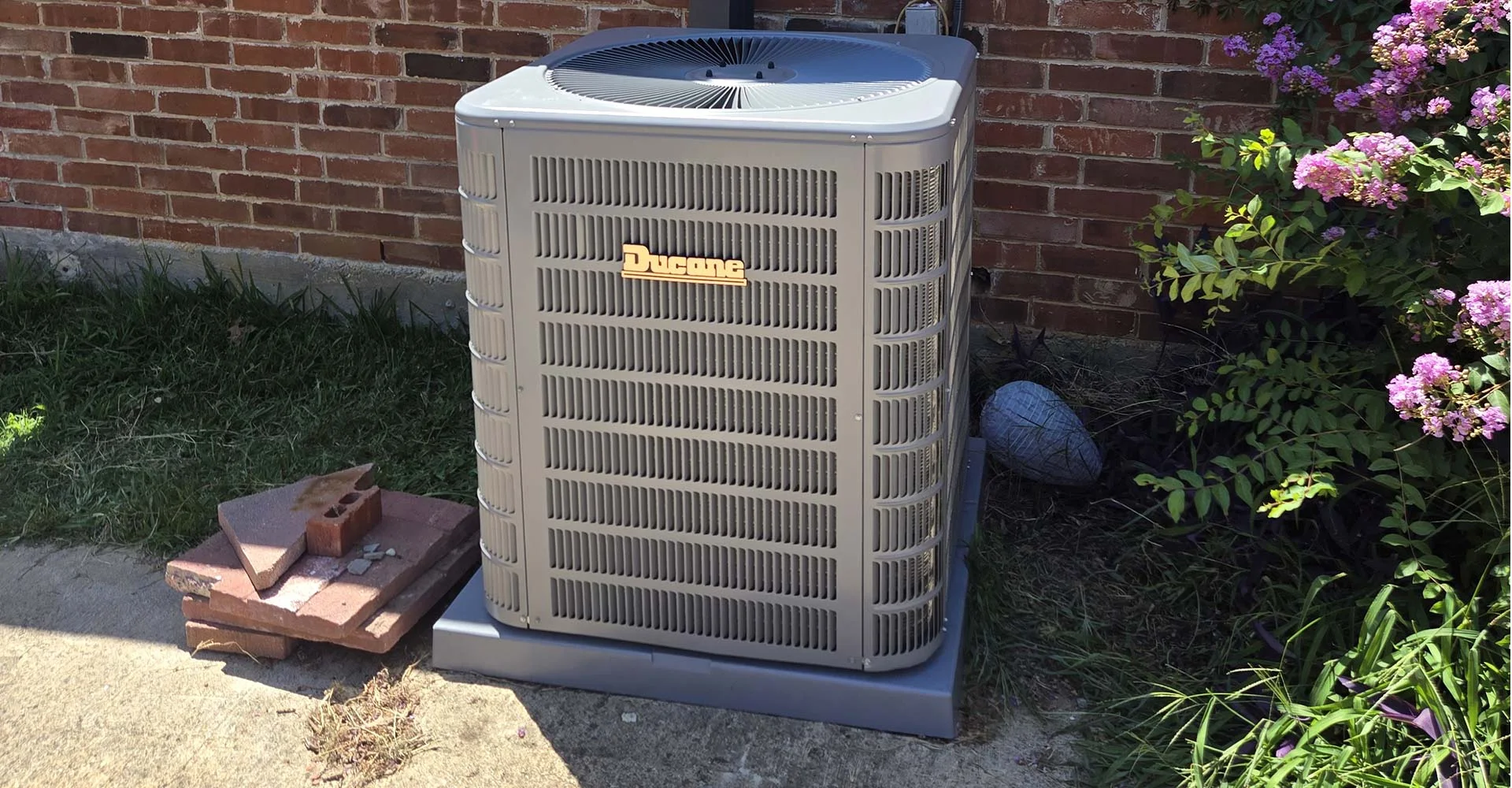
Straight talk about refrigerant leak repair services
Refrigerant doesn’t get used up. It’s a sealed loop, and if the level dropped, it left through a hole. The yearly “top-off” some companies offer isn’t maintenance, it’s a subscription to their truck, and every pound that escapes gets more expensive while the low charge quietly overworks the compressor toward an early grave. On the older R-22 systems still running around DFW, that arithmetic gets ugly fast.
Finding the leak is detective work with proper tools: electronic sniffers, nitrogen pressure testing, dye where it earns its place, and a knowledge of where each equipment generation tends to fail. Evaporator coils rot at the U-bends, line sets rub through where they were strapped careless, service valves weep at the cores. Once found, the repair is honest brazing or component replacement, a verified vacuum, and a weighed charge. Then it’s done, and next summer it’s still done.
How the leak gets found and fixed
- Electronic leak detection on coils, lines, and valves
- Nitrogen pressure testing to confirm and isolate
- Evaporator and condenser coil repair or replacement
- Line set repairs, reroutes, and replacement runs
- Service valve and Schrader core replacement
- Verified vacuum and weighed-in charge after repair
- Honest R-22 versus upgrade math on older systems
North Texas asks more of cooling equipment than nearly anywhere in the country. Triple-digit stretches that run for weeks, attics that hit 140 degrees while the equipment inside them works, and a season that starts in April and lingers into October. Gear that would coast for years in a milder state gets tested here every single summer, which is why the quality of the diagnosis and the work behind it matters more in DFW than almost anywhere else.
What working with 2L looks like
Tell us what it’s doing
Call or send the form and describe the symptom: what you feel, hear, and when it started. refrigerant leak repair services calls get a real conversation up front, so we arrive with a working theory and the likely parts already on the truck.
Diagnosis with instruments
Gauges, meters, and a temperature probe, not a glance and a guess. You see the readings that condemn the failed part, and you hear the fix in plain language with a firm price before any work starts.
Fixed, tested, cleaned up
The repair gets done right, the system gets run and verified against spec, and the work area is left the way we found it. You get straight advice on anything worth watching, and that’s it. No pitch.
Why this work comes to 2L, all across Midlothian and the DFW area
Cooling work in this part of Texas is a volume business for every company, but volume is exactly the problem: quotas, commissions, and a new face every visit. 2L runs the other way. Jimmy Willson has spent more than twenty years on DFW cooling systems, he’s the one who shows up, and nothing in how he’s paid rewards finding problems you don’t have.
If the leak sits somewhere that makes the repair uneconomical, a rotted coil on a fifteen-year-old R-22 unit, say, you’ll get that math straight rather than a heroic repair bill. And if it’s a twenty-dollar valve core, which it sometimes is, that’s what you’ll pay for. The finding drives the fix.
Nearby communities we serve for this work:
Questions homeowners actually ask
Straight answers, the same ones you’d get on the phone. If yours isn’t here, call and ask.
How do I know if my AC has a refrigerant leak?
The classic signs: cooling that fades over weeks or returns after a top-off, ice on the lines or coil, longer and longer run times, and a hissing you can sometimes hear at the unit. If a company has added refrigerant more than once, you have a leak by definition.
Why not just keep topping off the refrigerant?
Because it’s the most expensive way to own an air conditioner. You pay for refrigerant that’s already leaving, the low charge stresses the compressor between visits, and on R-22 systems the per-pound price climbs every year. One real repair beats the subscription.
Can refrigerant leaks be dangerous?
The refrigerant itself is more a wallet hazard than a health one in typical leak quantities, but the consequences, a frozen coil flooding the ceiling, a compressor running toward burnout, get expensive. It’s a fix-it-now problem either way.
Where do AC systems usually leak?
Evaporator coils are the most common culprit, especially certain vintage years that corrode from the inside. After that: line set rub-throughs, brazed joints done carelessly, and service valve cores. Experience with each equipment generation shortens the hunt considerably.
Is it worth fixing a leak on an old R-22 system?
Sometimes yes, a valve core or accessible line repair can buy years for modest money. A leaking coil buried in an aging system usually isn’t. You’ll get both numbers, repair and replace, and the decision stays yours with no lean on the scale.
Ready to get this handled right?
Tell us what your system is doing and Jimmy will get right back to you with the next step: a clear answer, a fair price, and refrigerant leak repair services done the way it should be. Reach out through the contact page or call any hour.
(214) 717-3959
Honest heating, cooling, and air-quality service for Midlothian, TX and the surrounding DFW communities. Owner-operated since 2023.
Open 24/7 for emergencies
Midlothian, TX 76065