One house, multiple climates, on purpose
Upstairs and downstairs disagree by eight degrees. The office roasts while the bedroom freezes. Zoning gives each area its own thermostat and ends the treaty negotiations.
The straight version
A single thermostat governing an entire house is a compromise everyone learned to accept: it reads one hallway and imposes that hallway’s climate on rooms with completely different sun, occupancy, and heat load. Two-story homes make the compromise painful, upstairs collects the heat of the whole house plus the roof, downstairs sits in its shade, and no single setpoint serves both. Zoning ends the compromise mechanically.
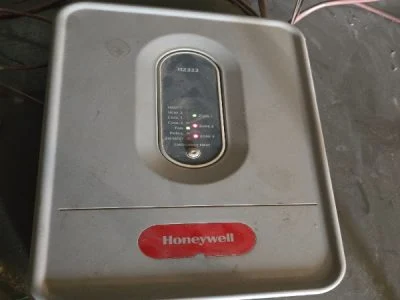
Motorized dampers divide the ductwork into zones, each with its own thermostat, and a zone control panel orchestrates the calls so the system conditions the areas that ask for it. Upstairs at 72 for sleeping while downstairs coasts, the office cool through the workday while bedrooms rest, each zone billed only for the conditioning it uses. We design zones around how the house actually lives, size the bypass and staging correctly, and commission every zone against its own thermostat.
A word on urgency, since half these calls start with it: describe the symptoms on the phone and you will get an honest read on whether this is a tonight problem or a this-week problem. Households with babies, elderly family, or medical equipment go to the front of the line. Everything else gets a real window, not a four-hour maybe, and after-hours terms get stated plainly before a truck ever rolls.
Homes where zoning shines
- Two-story homes with a floor-to-floor split
- Home offices with all-day occupancy
- Master suites far from the thermostat
- Bonus rooms over garages
- Large single-story homes with wings
- Multi-generational households on different schedules
Related energy efficiency work we handle: Home Energy Audit Services · Energy Efficiency Assessments Services · HVAC Efficiency Upgrades Services · Home Comfort Assessments Services · Energy Cost Reduction Services · the full catalog.
How we approach it
Zoning design has real engineering in it: dampers and staging must be matched so the system never chokes when one small zone calls alone. Botched zoning gives the whole technology a bad name, and it’s usually a bypass or staging mistake. Ours are designed against the airflow math, which is why they run quiet and last.
Efficiency work only counts when it survives contact with the utility bill. That is why everything in this category starts from measurements, blower door logic, duct leakage, static pressure, runtime data, and ends with a weather-adjusted comparison against your baseline. Some of the best-value fixes are unglamorous: sealing, balancing, controls set up correctly. The glamorous ones get recommended only when your numbers justify them.
Financing through Synchrony and Wisetek is there when the timing is hard, and the emergency line reaches a real person 24/7. Serving Midlothian and the four-county southern DFW footprint: Ellis, Johnson, Dallas, and Tarrant counties. See finished work in the gallery.
From first call to fixed
- Real person on the phone, honest window, no four-hour maybe.
- Instrument diagnosis first. Talk of money only after the fault is actually found.
- Firm quote, your decision, zero pressure toward the bigger ticket.
- Verified results before the truck leaves, and a straight answer about what to watch next.
Scheduling reality, told straight: spring and fall book easily, July and January book hard. Maintenance-plan members get priority when the calendar tightens, which is one of the two honest reasons the plan exists. The other is that a system seen twice a year almost never surprises anybody, and boring is exactly what you want from equipment that runs three thousand hours a summer. Ask about the plan on any visit and you will get the honest math, not a pitch.
Zoned HVAC Services, plainly answered
Something more specific going on? Call (214) 717-3959 and describe it. You’ll talk to the owner, not a call center.
Can my existing system be zoned or do I need new equipment?
Most existing systems can take zoning: dampers in the current ductwork, thermostats in the zones, panel at the air handler. Variable-speed equipment zones especially gracefully, and we’ll tell you honestly how well yours will take to it.
How many zones does a typical house need?
Two covers most two-story homes, up and down. Three or four suit larger homes with a distinct office, master wing, or bonus room. More zones than the house’s real usage patterns just adds hardware, and we’ll say so.
Does zoning save energy or just add comfort?
Both, honestly. Conditioning only the zones in use cuts runtime, especially in homes where whole floors sit empty most of the day. Comfort is the reason people call, the bill relief is what they mention a season later.
Is zoning better than just getting a second system?
For most existing homes, zoning wins on cost. A second system makes sense in large additions or when the existing unit lacks capacity anyway. We’ll price the honest comparison for your house rather than defaulting to either.
What happens if a zone damper fails?
Dampers fail to a safe position and the system keeps running while the zone loses its independence. Repairs are straightforward, and quality dampers make it a rare event. We install the boring, reliable kind.
Where we do this work: Midlothian and the whole southern DFW footprint, Ellis County (Waxahachie, Red Oak, Ennis, Ferris, Ovilla, Maypearl, Palmer, Italy, Milford) · Johnson County (Burleson, Cleburne, Joshua, Alvarado, Venus, Godley, Keene, Rio Vista, Grandview) · Dallas County (Dallas, Cedar Hill, DeSoto, Duncanville, Lancaster, Wilmer, Hutchins, Balch Springs) · Tarrant County (Fort Worth, Arlington, Mansfield, Kennedale, Forest Hill, Crowley, Everman, Benbrook). Every community links to its own local page from the service-areas map.
Twenty years on the tools, and the sales desk never got built.
Book a Service Call