Your builder warranty has a clock on it. Beat it with paperwork.
Most new Texas homes carry a two-year builder warranty on mechanical systems, and most homeowners let it lapse without ever testing what it covers. An independent HVAC inspection sixty to ninety days before the deadline turns that dormant coverage into fixed equipment, on the builder’s dime.
Why the warranty goes unused
Because the system “works.” The house cools, the thermostat responds, nothing leaks onto anything visible, so the anniversary passes quietly and the coverage dies. Then the third summer arrives, the system that was quietly undercharged since day one finally makes itself known, and the repair that would have been a warranty work order becomes your check.
Builders are not going to schedule this inspection for you. The warranty model works in their favor precisely because problems that develop slowly stay invisible until the obligation expires. The counter-move is simple: get a licensed contractor into the system while every finding is still legally the builder’s to fix.
The findings that come out of these visits are rarely exotic. Undercharged refrigerant circuits that were never commissioned. Duct connections that lost their seal after two summers of attic heat. Condensate lines already half-blocked, float switches wired to nothing, capacitors reading out of tolerance on equipment barely two years old. Ordinary defects, ordinary fixes, and every one of them claimable while the coverage is alive.
The findings list from a one-hour inspection is the difference between “we noticed it in year three” and a claim filed with sixty days of coverage left. Same defects. Different invoice.
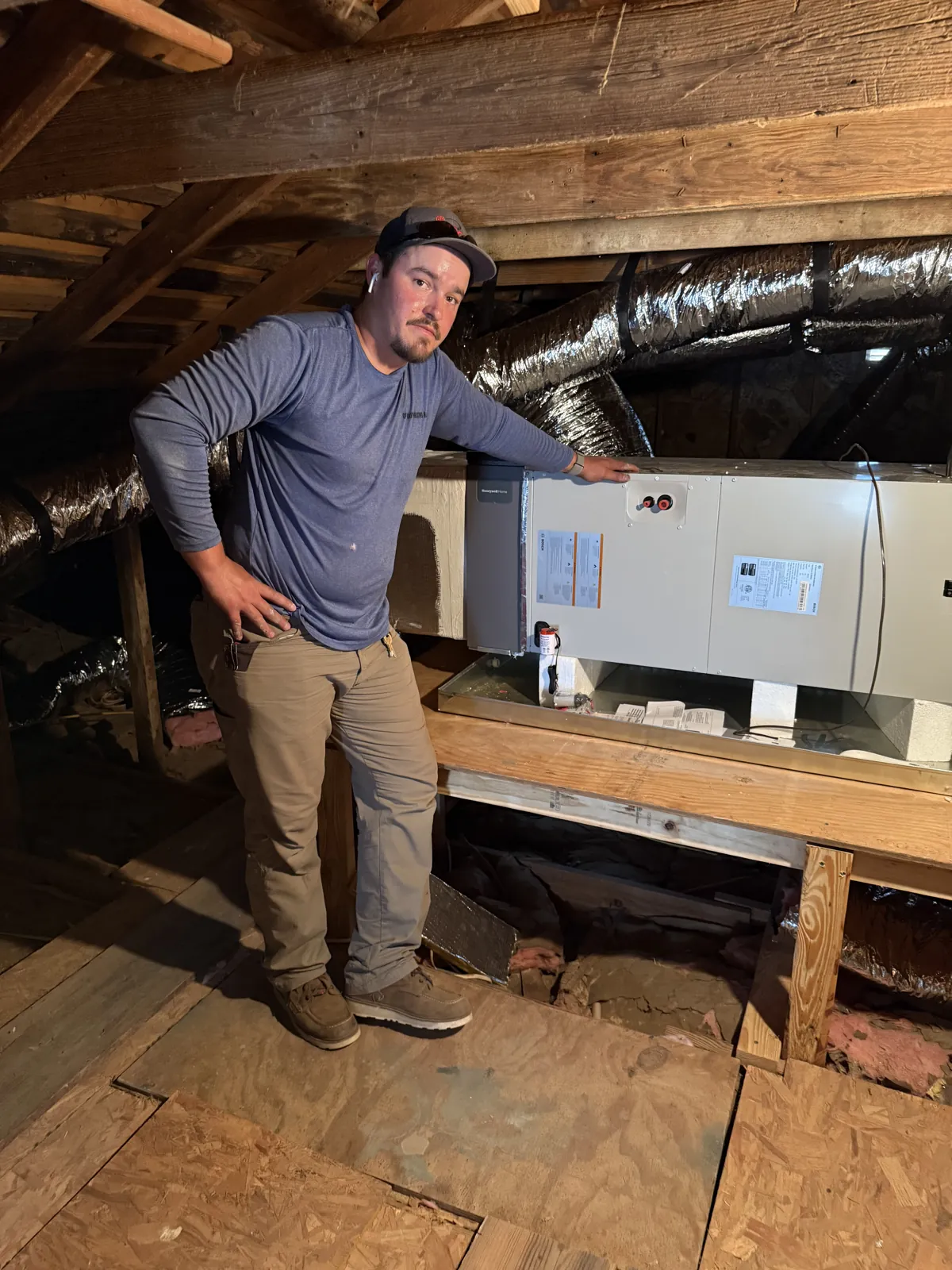
What the pre-warranty inspection covers
Everything a final commissioning check should have verified, plus the wear patterns two years of Texas summers reveal. The scope is built around what builder warranties actually cover, so every finding maps to a claimable line.
- Refrigerant charge and circuitGauge verification, coil condition, and any evidence the system left the factory or the install undercharged.
- Static pressure and duct deliveryMeasured airflow against design, with duct sealing and support checked in the attic where two summers of heat have tested every joint.
- Furnace and combustion sideCabinet opened, burners and board inspected, gas inlet and manifold pressure measured against the data plate.
- Electrical and controlsCapacitor values against spec, contactor wear, thermostat staging, and the safety switches that were supposed to be wired on day one.
- Condensate systemPrimary slope, secondary pan, float switch operation. A two-year-old drain line already half-clogged is a warranty item today and a ceiling repair next year.
- Installation workmanshipLine set insulation, equipment mounting, clearances, and the corner-cuts that show up when an install was one of forty that month.
How the claim actually goes
You do not need to argue with anyone. The process is administrative, and the report is built to survive it. Most builder warranty departments respond to documented, spec-referenced findings without a fight, because their alternative is explaining to an arbitrator why a gauge reading is wrong.
- You tell us your closing anniversary. We schedule the inspection sixty to ninety days ahead of the deadline, so there is time to file and follow up.
- Jimmy inspects the full system and documents every finding with photos and measurements referenced to the manufacturer’s specifications.
- You submit the report through your builder’s warranty portal or email, usually a fifteen-minute task. We keep the language claim-ready so you can copy it straight in.
- The builder’s warranty contractor performs the repairs. If you want us to review their work afterward, that follow-up visit is quick and cheap.
Do the date math now
Take your closing date and add two years. That is the wall. Subtract ninety days from the wall and you have the window where this inspection does its best work: enough time to file, enough time for the builder’s warranty contractor to schedule, enough time to argue if it comes to that. Second owners should check too. Builder warranties in Texas commonly run with the home rather than the first buyer, so a house bought at eighteen months old can still have six months of mechanical coverage the listing never mentioned. The booklet in the closing packet settles it, and if you cannot find yours, call anyway. We can usually work out coverage from the closing dates alone, and the inspection is worth doing on its own merits either way.
One planning note: warranty contractors get busy in summer for the same reason everyone else in this trade does, so a claim filed in April moves faster than the identical claim filed in July. If your anniversary lands in the hot months, inspecting a full quarter ahead buys you the calendar room.
Warranty deadline questions
Not sure when your coverage ends? Find your closing date and call (214) 717-3959. We will work out the timeline on the phone. Examples of findings live in the gallery.
How do I know what my builder warranty covers?
Most new Texas homes come with a one-year workmanship and two-year mechanical systems structure, either from the builder directly or through a third-party warranty company. Your closing packet has the booklet. HVAC sits squarely in the mechanical coverage, which is the part expiring at year two.
My two years are almost up. Is next week too late?
Call anyway. If the deadline is close we prioritize the visit, and a claim filed before the expiration date generally stands even if the repair happens after it. The report is dated, and that date is what matters.
The system seems fine. Is this worth doing?
That is what the owners of quietly undercharged systems say in year two. The inspection exists precisely because HVAC defects develop below the threshold of notice. If everything checks out, you get a documented healthy baseline and a clean conscience about the deadline.
Will the builder just deny everything?
Denial is easy against a homeowner’s description of a noise. It is much harder against gauge readings photographed on the equipment and referenced to the manufacturer’s data plate. That is the entire reason the report is built the way it is.
Can you do the warranty repairs yourselves?
Warranty repairs belong to the builder’s contractor, and that is who should do them, on their money. If something falls outside coverage, or you want a second opinion on the warranty work, we are a licensed contractor and can quote it separately with no obligation.
Sixty days of coverage left is enough. Zero is not.
Book an Inspection