South Dallas HVAC diagnostics done with instruments
Oak Cliff bungalows and Kessler Park homes hide their HVAC problems in places a quick look never reaches. A proper diagnostic finds the actual fault instead of condemning the nearest part.
Old houses reward diagnosis and punish guessing
Our Dallas work concentrates on the southern side of the city, from Oak Cliff and the Bishop Arts orbit through Kessler Park and down toward the county line, and that housing stock is some of the most interesting in the metroplex for this trade. Prewar bungalows on pier-and-beam foundations, mid-century ranches still sitting on their original bones, and in between them decades of duct and wiring work added by whoever was available at the time. These houses do not fail in obvious ways, which is exactly why they punish a company that guesses.
The classic pattern goes like this. A homeowner in an older Oak Cliff bungalow calls about a room that never gets comfortable, or a system that runs constantly without winning. A parts-first tech looks at the equipment, finds a component with some age on it, and recommends replacing it. The part gets replaced, the complaint stays, and now the conversation drifts toward replacing the whole system. Nothing in that sequence involved a measurement, and nothing in it addressed why the house is behaving that way.
The diagnostic version starts with the air instead. Static pressure, return airflow, temperature split across the coil, room-by-room delivery, and where conditioned air is escaping into a crawlspace or an attic. In these houses the answer is very often in the distribution rather than in the cabinet, and once the readings are in front of you the room that never conditions right turns into a specific and fixable finding rather than an argument about equipment.
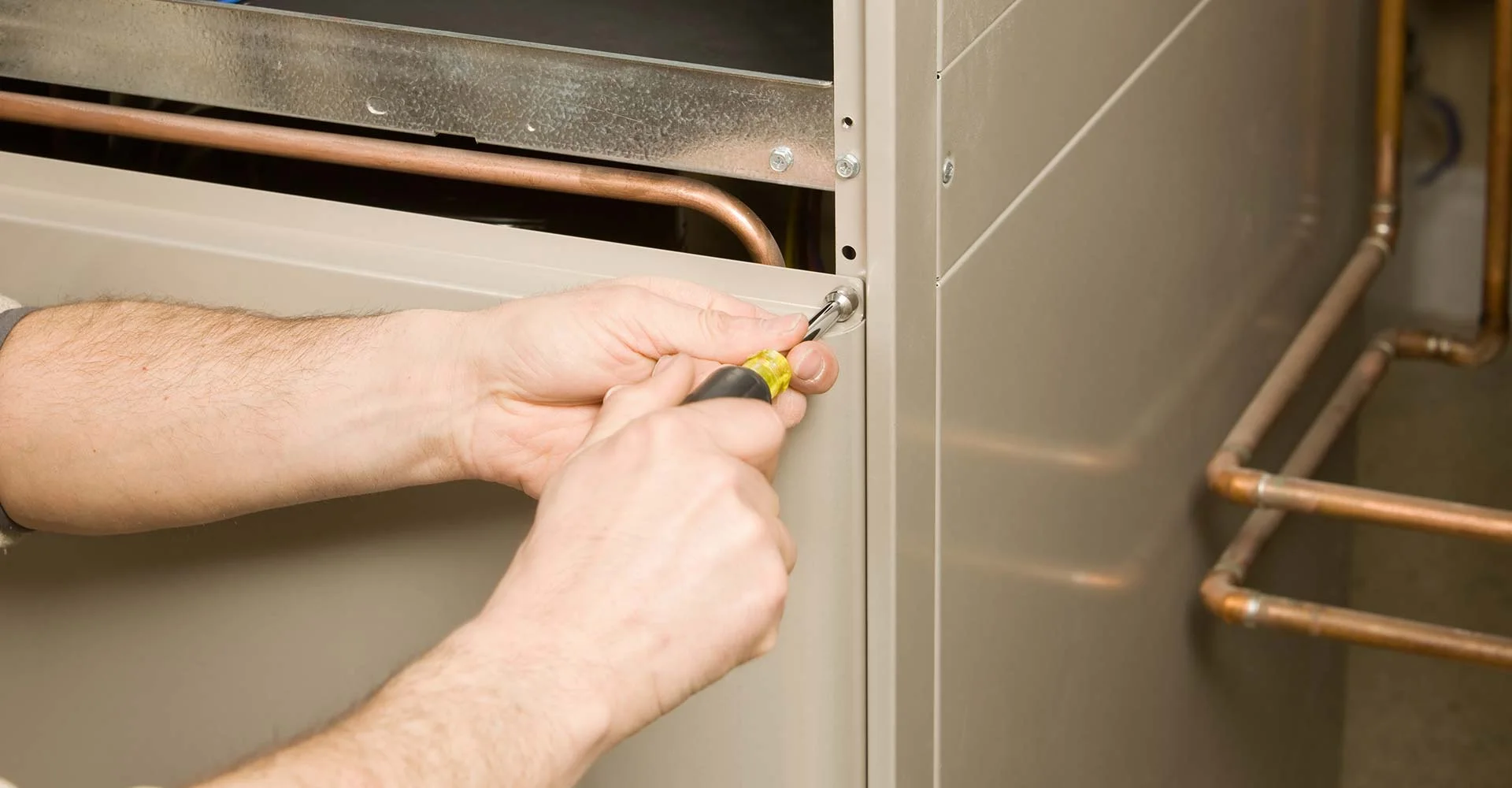
Ductwork improvised across generations
A pier-and-beam house in southern Dallas that predates central air has usually been through several generations of improvisation. Duct got run under the floor when central air arrived, more got added when somebody finished out a room or enclosed a porch, and returns got placed based on what was easy rather than what the system needed. Each of those decisions made sense on its own day. Stacked across sixty or seventy years, they add up to a distribution system nobody designed and the equipment has been quietly fighting ever since.
That history is unrecoverable and it does not matter, because the air tells you everything you need. I follow the readings rather than the story: where the static pressure is high, which returns are starving the blower, which branches are delivering a fraction of their intended air, and where duct under the floor is pulling in crawlspace air instead of house air. Those measurements convert a decades-old mess into a short list of specific problems ranked by what they are actually costing you.
This is also where the second most expensive mistake in the trade lives. A good machine bolted onto a bad distribution system gets blamed for the distribution system’s behavior, and the recommendation that follows is a new machine. I would rather show a Kessler Park or Bishop Arts homeowner the airflow numbers, explain what they mean in plain terms, and let them decide how far to take it. Sometimes the right move is a targeted duct repair and the existing equipment goes right back to doing its job.
Faults that hide until conditions get extreme
Some of the hardest calls are the ones where nothing is wrong when I arrive. The breaker trips only on the worst afternoons. The hum comes and goes. The bill jumped and the system looks perfectly normal. Those are the calls a lot of companies handle by replacing something plausible and hoping, and they are precisely the calls where a real diagnostic earns its keep, because intermittent faults leave physical evidence even when the symptom is hiding.
Heat-stressed components discolor. Contacts pit from years of arcing. A capacitor reads below its rating long before it fails outright. Connections that look fine will fail a wiggle test under load. A compressor pulling high amps through a weakening start component behaves perfectly in mild weather and quits the first week the heat index climbs. Reading that evidence is the skill, and after twenty-plus years across North Texas systems I know what it looks like on the panel and on the meter.
High bills with no visible cause work the same way. The system is running, the house is roughly comfortable, and the electric bill has quietly climbed. That points at efficiency rather than failure, and efficiency is measurable: refrigerant charge, coil condition, airflow, duct leakage, and how long the system has to run to satisfy the thermostat. There is a real number behind that complaint, and a diagnostic visit is how you get it instead of a shrug.
The cheapest repair in this trade is the one aimed at the right part the first time.
Jimmy Willson, ownerPhotos of finished Dallas County work live in the gallery, and the contact page books a visit in about a minute.
Diagnostics nearby Duncanville, Lancaster, WilmerEverything in Dallas the full service listAcross the whole footprint HVAC diagnostics
Second opinions on southern Dallas quotes
On a house with real character and real age, a replacement recommendation deserves a second set of instruments before you act on it. If a company has quoted you a compressor or a full system for your Oak Cliff or Kessler Park home, I will come take my own readings before I read their paperwork. That order is deliberate, because a finding should come from the machine rather than from somebody else’s conclusion about it.
More than once in these neighborhoods that has turned a replacement quote back into a repair, usually because the actual problem was in the distribution and the equipment was fine. Other times the first diagnosis was correct and I say so with no hedging, since certainty before a decision of that size is worth exactly what it costs. There is no version of this where I invent a cheaper answer to win a job, and no version where I invent an expensive one either.
From our Midlothian shop, US-67 puts us into southern Dallas faster than most companies dispatching from the far side of the city, which is a practical advantage when a system quits in July. Book a service call and you will hear the terms straight over the phone before a truck rolls. You will get the finding in plain words, backed by readings you can see, and the decision about what happens next stays entirely yours.
Dallas diagnostics questions, straight answers
Something more specific going on? Call (214) 717-3959 and describe it. You’ll talk to the owner, not a call center.
We have a pier-and-beam bungalow in Oak Cliff. Why is one room never comfortable?
In these houses that is almost always distribution rather than equipment. Duct added across generations, returns placed where they were easy, and under-floor runs pulling crawlspace air will all leave one room short. Airflow readings turn that complaint into a specific finding you can act on.
Which parts of Dallas do you cover?
The southern side of the city: Oak Cliff, the Bishop Arts orbit, Kessler Park, and the neighborhoods running south toward the county line. US-67 from our Midlothian shop puts us there quickly, which is the reason we serve that side well and say so honestly.
The breaker only trips on the hottest days. What is going on?
Peak load is what exposes a marginal component. A compressor pulling high amps through a weakening capacitor, a tired breaker, or a voltage issue will behave fine in mild weather and quit in a heat wave. It measures cleanly, and ignoring it usually costs a compressor in the end.
Our electric bill climbed but the system seems to run fine. Is that diagnosable?
Yes, and it is a real diagnostic rather than a shrug. Charge, coil condition, airflow, duct leakage, and run time all get measured, and the answer usually sits in one or two of them. There is a number behind that complaint and the visit is how you get it.
A company quoted us a new system for our Kessler Park home. Will you look at it?
Yes, and on an older home like that I would encourage it. I take my own readings before I look at their paperwork. Sometimes a repair is available behind a replacement quote, often because the real fault was in the ductwork. When the first finding was right, I will tell you that plainly.
Can improvised old ductwork actually be fixed, or does it all have to go?
Usually it can be fixed in targeted pieces. I rank the findings by what each one is costing you, so you can solve the crushed run and the starving return without rebuilding the whole system. On a mid-century ranch or a prewar bungalow that is frequently the smartest money in the house.
Need a straight diagnosis in Dallas? The owner answers the phone.
Book a Service Call