Every reading taken, and every reading explained
A real inspection puts gauges and a manometer on your heating and cooling and writes down what they say. Jimmy Willson does the work himself, walks you through each finding while you stand beside the equipment, and leaves you a written list. What you do with that list is your call. Nobody phones you afterward with a pitch.
What a whole-system inspection puts a number on
Plenty of outfits sell something they call an inspection that amounts to a glance at the filter and a quote for a new system. Ours is a set of measurements, taken in an order that makes sense, on every part of the system that can quietly cost you money or put your family at risk.
On the cooling side we measure the temperature split across the indoor coil, read refrigerant pressures and line temperatures against what that particular equipment should be doing, and take static pressure in the duct to learn whether the blower is fighting the system it feeds. The electrical check covers the capacitor, the contactor and the wiring connections, which are the parts most likely to quit on the first hot afternoon of the year.
Then the water and the fire. The condensate drain gets flushed and followed to wherever it ends, and the float or safety switch gets tested by actually tripping it instead of assuming it works. On gas heat we look over the burners and the heat exchanger and run a combustion and carbon monoxide check, because a furnace can keep a house perfectly warm while producing something you never want inside it.
None of those readings mean much alone. Put together, they tell the story of how the system has been treated and how much life it has left.
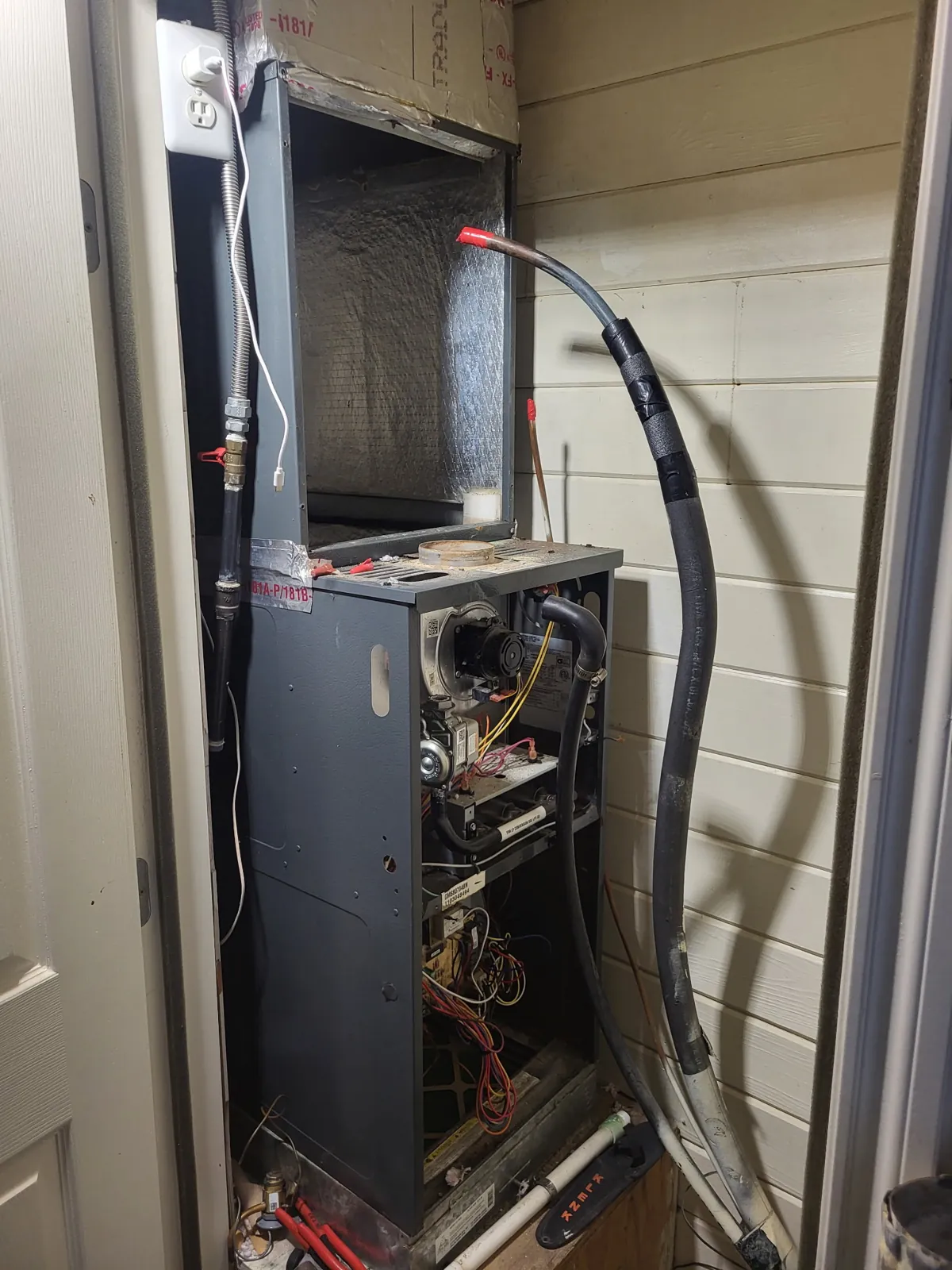
Courthouse-square houses and the history nobody wrote down
The older homes around the courthouse square, along with the streets that filled in around the Santa Fe shops, are where Cleburne’s railroad years still show. Many of those houses went up before anybody planned for ductwork. The system you see in one today was retrofitted in later, sometimes more than once, by whoever happened to get the job that year.
Retrofits leave fingerprints, and we look for them. Duct squeezed through spaces that were never meant to carry it. A return too small for the blower pulling on it. Tall ceilings that hold warm air up high and change how much airflow a room actually needs. Each of those changes what a normal reading looks like, so we judge the numbers against the house you own instead of a textbook house.
Our HVAC inspection service works the same way across the whole area. For a house built recently on the north side of town, the new home HVAC inspection is set up around builder questions and punch lists instead.
Gas heat gets its own look
Many older homes near the square heat with gas, and gas heat deserves a combustion check every year whether or not anything feels wrong. A cracked heat exchanger or a flue that will not draft gives no warning you can sense from the couch. The instruments catch it.
The seller’s disclosure is not a service record
Buying an older Cleburne house means taking a stranger’s word about equipment you cannot see inside. The listing says the AC works. The disclosure says nothing is known to be wrong. Neither one tells you whether that condenser has been living on a refrigerant top-up every summer, and a slow leak like that stays hidden until somebody goes looking for it.
A general home inspection usually treats heating and cooling as a functional test: it turns on, and air comes out at roughly the right temperature. That is a fair starting point and a thin basis for one of the biggest purchases you will make. Our inspection gives you readings you can put in front of the seller during the option period, or simply keep, so your first summer in the house brings no surprises.
Equipment age is the other thing a listing glosses over. The data plates tell us when the outdoor unit and the furnace were built, and whether the indoor and outdoor halves were ever replaced together or swapped one at a time over the years. Mismatched halves are common in older houses, and they explain a lot of weak cooling nobody could ever pin down. Knowing that before closing turns a vague worry into a line item you can negotiate.
You can see finished work in the gallery, and the contact page puts an inspection on the calendar. If the readings show conditioned air escaping into the attic, duct sealing in Cleburne is usually the next conversation.
Taught at the equipment, never sold at the kitchen table
Jimmy started 2L because he did not like where the heating and cooling business was headed, with salesmen in the living room and the experienced techs back at the shop. His version puts twenty-plus years of experience inside your house instead of behind a sales desk. He calls it being the professor of HVAC, and an inspection is where that name earns itself.
In practice, you are invited to stand next to the furnace or the condenser while the readings come in. You hear what the temperature split means and whether yours is healthy. You see the capacitor reading next to the number printed on its side. If the drain line runs slow, you watch the water back up. Homeowners leave understanding their own equipment, and that understanding is worth more over the next decade than any single repair we could ever sell them.
Afterward you get a written list of findings in plain language, with anything that touches safety at the top. You owe us nothing beyond the inspection itself. Take the list to any company you trust or call us back; either one is fine with us. Some findings are small enough to handle yourself, a clogged filter or a tripped float switch, and when that is the case you will hear it plainly. If the heating side turns out to be near the end, furnace installation in Cleburne explains how we would approach the replacement.
Inspection questions from Cleburne homeowners
Something specific worrying you? Call (214) 717-3959 and describe it. The owner picks up, day or night.
Is this the same as the HVAC part of a home inspection?
No. A general home inspection usually confirms the system turns on and blows cold or warm air. We measure how well it does that, check the refrigerant, electrical parts, drain safety and duct pressure, and run a combustion and carbon monoxide test on gas heat. It goes much deeper on one system.
Why does a gas furnace need a combustion check if it heats fine?
Because heating fine and burning clean are two different questions. A furnace with a cracked heat exchanger or a poorly drafting flue can keep the house warm while putting carbon monoxide where it does not belong. The older homes near the square often run gas heat, and that check deserves a yearly slot.
Will you try to sell me a new system during the inspection?
No. The inspection is paid work on its own, and it ends with a written list of what we found. If something needs fixing, you can hire anyone you like. Jimmy built this company around honest answers, and a pitch tacked onto an inspection would undercut the whole point of it.
I am buying an older house. When should I book this?
As early in the option period as you can. That leaves time to hand the findings to the seller, ask for a repair or a credit, or walk away if the system is worse than the listing suggested. Waiting until after closing turns every finding into your expense.
Do I need to be home for the inspection?
We would like you there, at least for the walkthrough at the end. Half the value is hearing what each reading means while you are standing next to the equipment. If that is impossible, the written findings still go to you, and Jimmy will go over them on the phone.
What if the inspection finds nothing wrong?
Then you get a written record that says so, with the readings to back it up. That record is worth having. It gives you a baseline for next year, and if you ever sell, a buyer’s inspector will see a system that somebody actually measured instead of guessed about.
Want to know what your Cleburne system is really doing? Talk to the man who will measure it.
Book an Inspection