The most expensive machine in the house you’re buying deserves its own inspection
Your option period is short and the HVAC line on a general inspection report is shorter. Before you close on a home anywhere in the southern DFW metro, put gauges on the system and find out what you are actually inheriting.
“Functioned at time of inspection” is not a diagnosis
That phrase, or something like it, is what most buyers know about the HVAC in the house they are buying. It means the system turned on. It does not tell you the compressor is on its last capacitor, the evaporator coil is corroding shut, the ducts are leaking a third of your air into the attic, or the “recently serviced” sticker on the cabinet is doing a lot of quiet lying.
Replacing a full system in this metro runs five figures. The inspection that tells you whether that bill is two years away or ten costs a fraction of one mortgage payment.
A dedicated HVAC inspection during your option period answers the questions that actually move money. How old is this equipment, really, by serial number rather than by the seller’s memory? Is the refrigerant charge right, and if it is low, where is it going? What condition are the heat exchanger, coil, and blower actually in? Do the ducts deliver air to the rooms you are about to put children in?
Age matters more here than anywhere else in Texas. A well-treated system in this climate is designed for roughly twelve to fifteen summers, and the metro’s resale stock is full of equipment on the far side of that line wearing a fresh coat of hose water. If the house still runs an R-22 era system, the phased-out refrigerant alone changes the repair math enough to belong in your negotiation.
Jimmy has spent more than twenty years repairing systems in exactly these neighborhoods, in Cedar Hill and DeSoto homes built in the nineties, in Mansfield and Waxahachie homes built last decade, and in brand-new builds still under blue tape. He knows what each era of housing stock hides, and the report tells you in plain language, sorted by what it costs.

What the purchase inspection covers
- Real equipment age and history
- Decoded from serial numbers on every piece of equipment, checked against what the listing claims and what the repair stickers suggest.
- Refrigerant circuit health
- Charge verified with gauges, coil condition assessed, and any sign of leak-and-refill maintenance flagged, because a system that needs a yearly top-up is a purchase decision in itself.
- Heat exchanger, burners, and gas supply
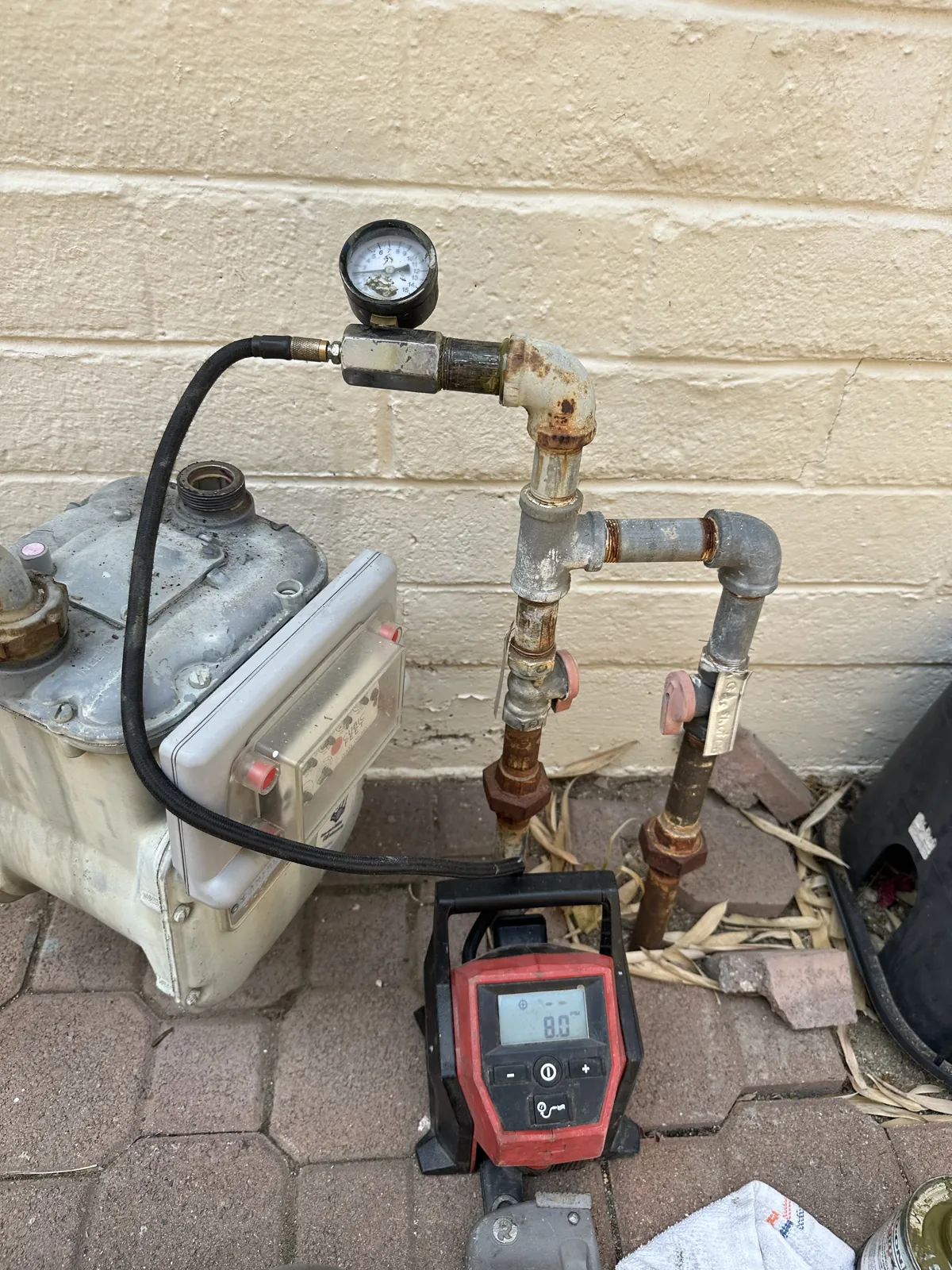
- Furnace cabinet opened, combustion side inspected, inlet and manifold gas pressure measured against the data plate.
- Ductwork and airflow
- An attic walk covering sealing, insulation, crushed or sagging runs, plus static pressure and room-by-room delivery. Duct problems are invisible from below and expensive to discover in July.
- Drainage and overflow protection
- Primary drain slope, secondary pan condition, float switch operation. Water damage from a clogged condensate line is a ceiling repair wearing an HVAC costume.
- The repair outlook, in dollars-adjacent terms
- Every finding tagged by severity and urgency, so you know what needs doing before closing, what can wait, and what is simply the age of the machine.
A report your agent can put on the table
Findings from a licensed HVAC contractor with photographs and gauge readings carry a different weight in negotiation than a line on a general report. Buyers in this metro have used these inspections to negotiate repairs, price reductions, and seller-paid replacements before closing.
The report is yours to use however the deal requires: forward it to your agent, attach it to a repair amendment, or keep it as your first year’s maintenance roadmap. And if the system turns out healthy, that is worth knowing too. You close with a clear head and a known baseline instead of a lingering question mark over the biggest appliance you own.
Sellers use this too. A pre-listing inspection takes the HVAC question off the table before a buyer’s inspector puts it there, and in a summer market a documented healthy system is one of the few claims in a listing that comes with gauge readings attached.
Bring the general inspection report if you already have one. Where it flagged the HVAC, we drill into the specifics; where it stayed silent, we check anyway, because silence in a three-hour whole-house visit is not the same thing as a clean bill of mechanical health.
Timing matters most on purchases. Option periods in Texas commonly run seven to ten days, so call as soon as the contract is executed and we will get the visit inside your window.
Buyer questions
Mid-option-period and short on time? Call (214) 717-3959 now and tell us your deadline. Browse the gallery to see what these visits find.
My general inspector already looked at the HVAC. Why pay twice?
A general inspector’s HVAC scope is visual and functional: does it run, does it cool. Ours is diagnostic: gauges on the ports, cabinets open, pressures measured, ducts walked. The two reports answer different questions, and the expensive surprises live in the second one.
Can you get out during my option period?
That is the normal case for this service. Tell us the deadline when you call and we schedule against it. Same-week visits are usually possible, and we move faster when a contract clock is running.
Do you coordinate access with the seller’s agent?
Yes. Give us your agent’s contact and we handle scheduling through the normal showing process, the same way your general inspector did.
What if the system is fine?
Then the report says so, with the measurements to prove it, and you close knowing the age, condition, and remaining life of everything mechanical. A clean bill of health on a five-figure system is not a wasted inspection.
Does this work for older homes too?
Yes, and honestly the older the home, the more the inspection earns. Systems in the metro’s nineties and two-thousands housing stock are at or past design life, and knowing which side of that line yours sits on changes what you offer.
Your option period is the only week the seller has to care. Use it.
Book an Inspection